







Is 2D animation more expensive than 3D
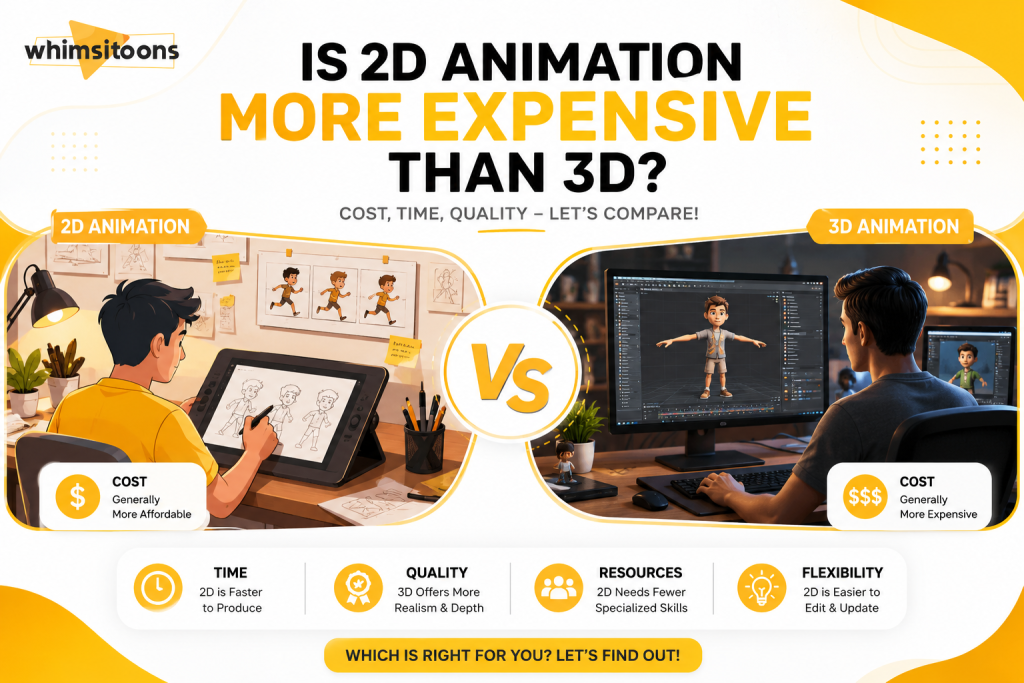
Animation sits at the intersection of art and economics, a balance between storytelling vision and production reality.
For many businesses, marketers, and creators, the biggest challenge isn’t just producing animation, it’s understanding how much it will actually cost. Budgets can vary dramatically, and without clear guidance, choosing between 2D and 3D animation can feel confusing and risky. Many decision makers worry about overspending on production, underestimating project timelines, or selecting the wrong animation style for their goals.
A California State University study notes that union rate thresholds averaging around $25,000 per minute of animation, setting a benchmark for broadcast level work.
Within that context arises the enduring question: Is 2D animation more expensive than 3D, or do complexity and scope dictate the final cost?
From labor intensity to rendering time, every frame carries a price.
As Walt Disney said,
“Animation can explain whatever the mind of man can conceive.”
But transforming imagination into motion always tests the limits of time, technology, and budget.
In the blog ahead, we’ll break down what truly drives animation costs and how to spend smart without sacrificing creativity.
Key Takeaway
|
What is 2D Animation?
2D animation is known for its simplicity, which can be both its charm and limitation.
In modern times, flat style 2D animation services have become a popular choice for explainer videos, educational animation, and corporate explainer video projects due to its accessibility and flexibility.
Example of 2D Animation:
| Think of classic cartoons like Mickey Mouse or Tom and Jerry. It’s like drawing characters and scenes on a piece of paper and flipping through them quickly to create movement. |
What is 3D Animation?
3D animation is more complex, but it offers a level of realism, stylisation, and production pipeline depth that 2D can’t quite match.
3D animation services are often used in product demo animation, virtual reality (VR) animation, and augmented reality (AR) animation. Many companies also rely on animated product video services to showcase product features, demonstrate functionality, and improve marketing engagement.
Example of 3D Animation:
| Imagine your favorite video game characters or the superheroes in blockbuster movies. It’s like sculpting virtual clay and bringing it to life on a screen using tools like Autodesk Maya, Blender, or CGI (computer generated imagery). |
Factors That Affect the Cost of 2D Animation
Alright, now that we have a grip on what 2D animation is, let’s see what can make it expensive and whether 2D animation is more expensive than 3D.
1. Complexity of Artwork
The more intricate the characters and backgrounds, the more time and effort it takes to create them. This directly influences the overall 2d animation cost, especially when detailed character designs or complex background scenes are involved.
Simple, straightforward designs are easier on the wallet. In fact, the cost of 2d animation per minute can vary significantly depending on design complexity, frame rate, and production time.
In flat style 2D animation, fewer layers and simplified designs can help reduce the animation cost per minute, keeping your animation production budget in check.
2. Frame Rate and Animation Workflow
Animation works by displaying a sequence of images rapidly.
The more frames per second (frame rate), the smoother the animation, but it also means more drawings.
Higher fps can mean higher costs. An efficient animation workflow helps minimize unnecessary work and reduce animation revisions cost.
3. Length of the Animation
A longer animation naturally requires more drawings, which translates to more time and money.
Shorter projects can help reduce the overall animation studio rate and streamline your animation project timeline.
4. Skill Level
Experienced animators often charge more for their expertise.
It’s like hiring a seasoned chef versus a newbie cook.
Studio experience and specializations in motion graphics cost or sound design can affect pricing.
5. Deadline Pressure
If you need your animation pronto, it might cost extra. Rushed work can lead to overtime for animators, raising your animation studio rate.
6. Sound and Voiceovers
Adding sound design, sound effects, or voices adds another layer of cost. Quality audio isn’t free, but it can make a big difference in the final product.
Benefits of 2D Animation
Now, let’s talk about why 2D animation remains a beloved choice.
1. Cost Effective
2D animation often comes with a smaller price tag. This is why many businesses initially assume 2D animation is cheaper than 3D, especially for explainer videos and educational animation projects.
Compared to 3D animation, it’s more budget friendly, especially for smaller projects. Fewer resources and shorter production time mean lower animation cost per minute.
2. Simplified Style
Its simplicity helps convey ideas and emotions easily, ideal for explainer videos, marketing videos, or educational animation.
3. Time Efficient
2D animations can be produced quickly compared to 3D animations.
A shorter animation project timeline and lower animation studio rate make it appealing for businesses seeking quick, effective communication.
4. Artistic Freedom
With 2D, artists can experiment freely.
The format allows a wide range of stylisation options, from minimalist to richly detailed works.
5. Nostalgia Factor
Many of us grew up watching 2D cartoons.
The nostalgia and emotional connection are strong, especially in flat style 2D animation.
6. Easy to Edit
Making changes in 2D animation is straightforward. It’s like editing a document, you can tweak things easily.
This simplicity helps reduce animation revisions cost, keeping your animation project flexible and budget friendly.
Benefits of 3D Animation
Now let’s switch gears and explore why 3D animation shines in its own right.
1. Realism and Depth
3D animation brings realism and depth to the screen. Characters and objects have volume, making them feel lifelike.
This photorealistic 3D animation effect is achieved using tools like Autodesk Maya, Blender, and CGI (computer generated imagery) to deliver immersive results.
2. Versatility
3D animation adapts to various genres, from fantasy films to educational animation and corporate explainer video projects.
Its flexibility allows integration with motion graphics cost elements and interactive animation systems.
3. Complex Movements and Character Animation
3D animation excels in portraying complex movements, such as fight scenes or detailed gestures.
It allows for advanced character animation enhanced by motion capture, perfect for product demo animation and marketing videos.
4. Consistency
In 3D animation, characters and objects remain consistent from every angle, ensuring visual stability for video games or VR animation.
5. Interactivity
3D animations can be interactive, allowing users to explore and engage with the content, ideal for augmented reality (AR) animation, virtual reality (VR) animation, and interactive animation experiences.
6. Real Time Rendering and Rendering Time Cost
3D animation can be rendered in real time, but the high quality rendering time cost can rise significantly.
Advanced visual effects cost, complex 3D modelling cost, and production pipeline management contribute to higher expenses.
7. Future Proofing
As technology advances, 3D animation keeps evolving. It leverages the latest rendering engines and hardware improvements to deliver photorealistic 3D animation experiences.
Pro Tip:
| Consider 2.5D or mixed media animation, which merges 2D design efficiency with 3D depth, delivering premium visuals on moderate budgets. |
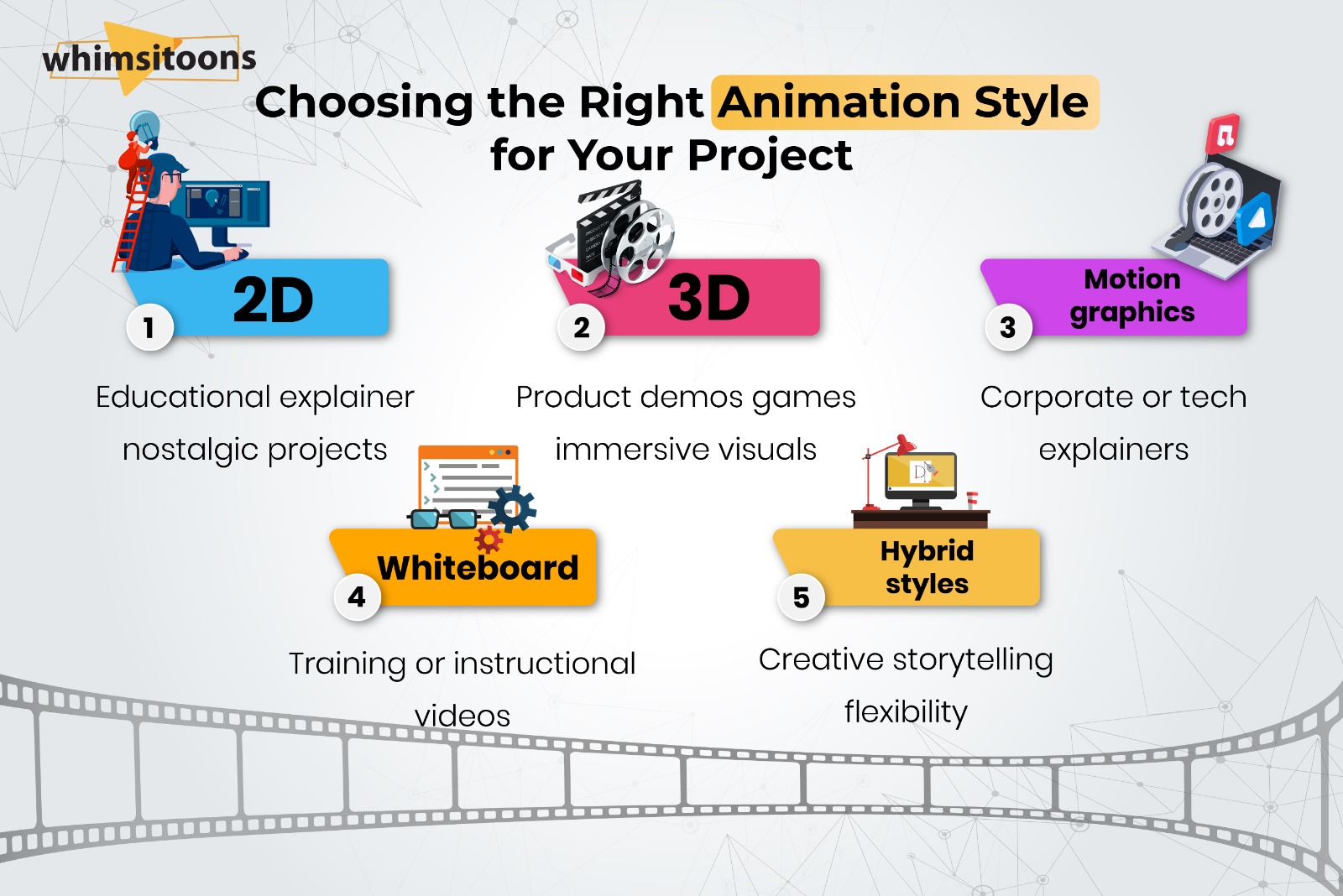
Is 2D Animation More Expensive Than 3D?
Now that we’ve discussed both styles, let’s put them head to head. Many businesses still ask, which is more expensive 2d or 3d animation, but the answer depends on the project’s scope, visual complexity, and production workflow.
1. Artwork Complexity
In 2D animation, the simplicity of artwork usually leads to lower costs.
Flat style 2D animation designs are quicker to produce, whereas 3D requires complex 3D modelling cost and character rigging cost processes.
2. Production Time
2D animation generally takes less time to produce than 3D, leading to lower animation studio rate and reduced labor costs.
3. Skill Level
Experienced 3D animators charge more for their expertise due to complex modelling, rigging, and rendering tasks. 2D animators, in contrast, are more readily available at a variety of price points.
4. Software and Equipment
3D animation requires specialized tools such as Autodesk Maya, Blender, and CGI pipelines, which add to the animation production budget. 2D animation, on the other hand, tends to be more accessible.
Things to Consider
| Professional software like Autodesk Maya or Cinema 4D adds recurring costs. Factor licensing fees and plugin costs early in your budget plan. |
5. Rendering and Visual Effects Cost
Rendering high quality photorealistic 3D animation or motion graphics cost components requires powerful computers or rendering farms, adding significant rendering time cost.
Real World Case Study:
| For instance, not all 3D projects carry massive budgets. In fact, some businesses even ask why is 3d animation cheaper than 2d in certain situations, especially when reusable 3D models and rigged characters reduce production time. A U.S. animation studio client completed a 3 minute 3D animation for just $12,000, covering full character modeling, rigging, texturing, and rendering within two months, proving that small scale 3D work can be highly cost effective when managed efficiently. |
6. Project Length
Longer projects naturally require more resources in either format. Managing your animation project timeline efficiently keeps costs under control.
7. Sound and Voice overs
Both 2D and 3D may involve sound design, voiceovers, and music, these costs are generally similar across both styles.
Overall, 2D animation tends to be more budget friendly, while 3D animation offers higher realism and interactivity. However, asking if 3D animation is more expensive than 2d isn’t always straightforward, because smaller 3D projects can sometimes cost less than highly detailed 2D productions.
Tips to Save Money on Animation Projects
When deciding between 2D and 3D, one common question arises: “Is 2D animation more expensive than 3D?” Regardless of your choice, here’s how to stay on budget.
- Plan Thoroughly:
Create a detailed storyboard or script before production. Clear planning helps streamline your animation workflow and minimizes costly animation revisions cost.
- Keep It Simple:
Complex designs increase costs. This is also why some clients wonder why is 2d animation so expensive, particularly when frame by frame animation or highly detailed character movements are involved. Opt for clean, impactful visuals that communicate your message efficiently.
- Optimize Production Time:
Avoid last minute changes that delay the animation project timeline and raise studio rate costs.
- Hire Experienced Animators:
Hiring professionals with proven studio experience ensures efficiency, better production pipeline management, and fewer errors.
Animation File Formats and Their Uses
| Format | Used For | Common Software | Advantages | Limitations |
| MP4 | Final delivery | Adobe After Effects | Small size | Limited editability |
| MOV | High quality playback | Apple Motion | Great color fidelity | Large files |
| FBX | 3D animation exchange | Autodesk Maya | Cross software support | Complex for beginners |
| SVG | 2D vector graphics | Adobe Animate | Scalability | Limited animation support |
| EXR | Rendering output | Blender, Maya | High dynamic range | Large storage size |
Emerging Trends and Technologies in Animation
Modern animation isn’t limited to traditional 2D and 3D techniques.
Studios are now exploring virtual reality (VR) animation and augmented reality (AR) animation for immersive storytelling.
These projects combine interactive animation, motion capture, and CGI (computer generated imagery) to create highly engaging content. Brands also use educational animation and product demo animation to simplify complex ideas or showcase their services visually.
Final Thoughts on Is 2D Animation More Expensive Than 3D
Animation costs depend on creativity, complexity, and purpose, not just price tags. 2D animation is typically more budget friendly, with shorter production timelines and simpler workflows. 3D animation, however, offers realism, depth, and versatility, though it comes with higher rendering and visual effects costs.
In the end, asking “Is 2D animation more expensive than 3D?” is really about finding the right fit for your goals and budget. Many businesses researching 2d vs 3d animation cost discover that the final price depends more on project complexity than on the animation format itself. With thoughtful planning and an efficient animation workflow, either style can bring your story to life beautifully and effectively.
Still deciding between 2D and 3D animation for your next project?
Whimsitoons helps brands turn ideas into engaging visual stories without the guesswork.
Email info@whimsitoons.com or call (646) 536-8048 to explore your animation possibilities.
FAQ
Q1: What makes Whimsitoons different from other animation studios?
At Whimsitoons, we combine creativity with cost efficiency, delivering both 2D and 3D animation that meets your goals and budget. Our process emphasizes clarity, quick turnaround, and brand storytelling that connects.
Q2: Does Whimsitoons offer both 2D and 3D animation cost breakdowns before production?
Yes! Whimsitoons provides a detailed animation cost breakdown for both 2D and 3D projects before starting, helping clients plan timelines, revisions, and deliverables transparently.
Q3: Why does 3D animation cost more than 2D?
3D animation often costs more because it involves complex modeling, rigging, lighting, and rendering, each step requiring advanced tools and computing power, unlike simpler frame by frame 2D animation.
Q4: How does a 2D vs 3D animation cost comparison typically look?
Generally, 2D animation is more budget friendly and faster to produce, while 3D animation commands higher costs due to software, equipment, and realism driven detail.
Q5: What factors affect animation cost for 2D and 3D?
Key cost factors include artwork complexity, frame rate, sound design, duration, and revision cycles. In 3D, additional expenses come from rendering and modeling precision.
Q6: Are 3D animated videos always more expensive than 2D?
Not necessarily. Smaller 3D projects or stylized animations can sometimes cost less than detailed 2D pieces. Project scope and quality expectations determine final pricing.
Q7: What’s the return on investment for 2D and 3D animation for businesses?
2D animation offers faster ROI for campaigns needing simplicity and clarity, while 3D animation provides long term brand value through immersive, high impact visuals that drive engagement.