







How Long Does It Take to Make an Animated Movie
Budgets balloon, deadlines slip, and render queues crawl, familiar headaches for anyone steering an animated feature.
In fact, one recent industry report notes that the use of motion-capture in animation increased by about 30% in 2023, indicating that technology shifts are reshaping timelines.
If you’ve ever wondered, “How Long Does It Take to Make an Animated Movie?”, you’re not alone.
Producers and directors constantly juggle artists, voice-casting schedules, and the balance between 2D and 3D pipelines while the clock races on.
As legendary animator Walt Disney once said,
“We don’t make movies to make money; we make money to make more movies.”
The catch? You can’t make more movies if time keeps slipping.
This article maps the full animation production timeline, step by step: from storyboarding and character design to rendering time, visual effects (VFX), and the final distribution and release. Let’s dive in!
Key Takeaways
|
Why Is the Time It Takes to Make an Animated Movie Important?
It Affects Production Efficiency and Costs
The production efficiency and cost of a movie depend largely on the time it takes to animate its sequences. To ensure that the project remains within budget, the completion time must align with the production deadline.
Protracted production schedules can lead to increased labor and technology expenses, as animators, designers, and other staff members need to be compensated for their extended work.
However, the overall quality of an animated movie also relies on the effort and hours spent on creating frames and aligning sequences. Restrictive deadlines and the pressure to complete the necessary work within designated hours may hamper the film’s performance.
Therefore, to strike a balance between creativity, quality, and budget, production teams often rely on whiteboard animation video services or outsourced animation studios to deliver on-time projects without excessive overhead costs.
Its Correlation with Creativity, Innovation, and Quality
A rigid timeline can limit creativity, reducing focus on inspired storytelling and innovative animation techniques. In contrast, a well-planned animation workflow allows teams to refine story development, design, and experimentation with new artistic styles or technologies.
A balanced animation production timeline promotes refined frameworks, well-paced script development, and imaginative character design. This enables creators to produce visually stunning films that push the boundaries of storytelling and feature-length animation.
The Movie’s Release and Marketing Strategy May Also Change
Besides creativity and quality, the film’s distribution and release strategy may be affected by delays. A well-managed animation production timeline ensures the studio meets both creative and financial goals.
Time is also required for post-production, visual effects (VFX), and marketing campaigns to align with the target release date, ensuring synchronization between production and promotion.
Understanding Pre-Production
The pre-production stage is where the entire project is planned and structured. It lays the foundation for the film’s animation workflow.
What Is Involved in the Pre-Production Phase?
This phase begins with story development, scriptwriting, and the creation of storyboards that define the narrative flow.
Character designers develop concept art and character sheets to define each personality, followed by voice acting and casting decisions.
Storyboarding and animatics help visualize scenes, while visual development defines the film’s artistic tone and palette.
How Long Does Pre-Production Typically Take?
The duration of pre-production varies depending on the type of animation. For instance, timelines for 2D vs 3D animation differ significantly. On average, it can span from several months to a few years.
More ambitious projects, particularly those involving advanced CGI or motion-capture, require extended planning to perfect visuals and technical execution.
Storyboarding and Scripting
Storyboarding serves as the visual blueprint for the film. Artists create illustrated sequences representing each scene to ensure consistent pacing and visual flow.
The script development process involves defining the story’s concept, themes, dialogue, and scene descriptions. Once the script is refined, animators, writers, and designers collaborate to bring characters to life.
The storyboarding and scripting phases may take several months, especially for studios focused on large-scale animation workflows or feature-length animation.
Pro Tip:
|
Prioritize clarity over complexity. A clear storyboard helps every department, from voice actors to animators, understand scene intent instantly and reduces revision cycles. |
Character and Environment Design
After scripting, artists work on character design and environmental details. Each character sheet outlines a character’s look, traits, and emotional expressions. Environment design defines the tone, lighting, and mood of scenes.
The more intricate the designs, the longer the production takes. Detailed models and CGI backgrounds increase complexity and affect the overall animation production timeline.
Roles vs. Responsibilities in an Animation Team
|
Role |
Core Responsibility |
Collaboration With |
Key Deliverable |
Phase |
|
Director |
Vision and pacing |
All teams |
Story flow |
All stages |
|
Storyboard Artist |
Visual plan |
Writer, director |
Storyboards |
Pre-production |
|
Animator |
Movement & performance |
Rigging, modeling |
Animated shots |
Production |
|
Sound Designer |
Audio sync & tone |
Editor, composer |
Sound mix |
Post-production |
|
Producer |
Budget & scheduling |
Entire team |
Project delivery |
All stages |
Voice Acting and Casting
How Are Voice Actors Selected?
Voice actors are chosen through auditions based on how well they match the envisioned personalities in storyboarding and character development.
Why Is Voice Acting Important?
Voice acting injects emotion and depth into animation, shaping how audiences connect with characters. Well-cast voices can transform a good film into a great one.
How Long Does It Take?
Voice acting typically spans several weeks to months, depending on the movie’s complexity and the actor’s availability. For projects in the animation workflow in the USA, studios often record multiple versions to test tone, clarity, and emotion before final selection.
What Are The Techniques Used in Animation
Animators employ a mix of hand-drawn imagery, 3D computer-generated frames, and stop-motion animation.
Modern studios often use motion-capture technology, where actors’ movements are recorded and mapped onto digital characters. This technique enhances realism and fluidity.
In the animation workflow in the USA, major studios like Pixar and DreamWorks use hybrid animation combining motion-capture, CGI, and traditional 2D to optimize creativity and efficiency.
These diverse methods form the backbone of a smooth animation workflow, improving the storytelling quality while keeping production on schedule.
How Much Time Is Allocated to the Animation Process?
For feature-length animation, the main animation phase can last from several months to a few years.
The complexity of visuals, movement, and detail determines the total animation production timeline.
Working with professional 3D animation services or whiteboard animation video services often shortens production without compromising quality.
Real-World Case Study:
|
Pixar Animation Studios’ 1995 film Toy Story marked the first full-length CGI animated feature and required an estimated 800,000 machine-hours of rendering time, showcasing how pioneering animation workflows and heavy compute loads directly impacted production timelines. |
Special Effects and Visual Effects (VFX)
Special effects (SFX) and visual effects (VFX) play distinct but complementary roles in animation production.
While SFX are created during filming (for hybrid projects), VFX are added digitally during post-production.
VFX can extend production due to additional rendering and simulation needs. One critical factor is rendering time, the duration required for computers to process and finalize every frame.
Extended rendering time significantly influences the animation production timeline, especially in CGI-heavy movies. Optimizing rendering performance ensures a balance between visual quality and production efficiency.
Animators use software like Adobe After Effects, Autodesk Maya, and Cinema 4D. These tools help manage rendering time and enhance production quality.
Post-Production
This stage includes editing, color correction, sound design, and music scoring.
Composers synchronize audio with scenes, while editors refine pacing and transitions.
The post-production phase can take months to a year, depending on film complexity and animation workflow efficiency.
Soundtrack and Music
A film’s soundtrack composition defines its emotional tone. Composers study the story, storyboards, and animatics to match melodies with mood.
Original scores or licensed tracks are integrated during post-production to elevate storytelling.
Sound design and music scoring are vital to the emotional impact and timing of each sequence in an animated film.
Quality Control and Testing
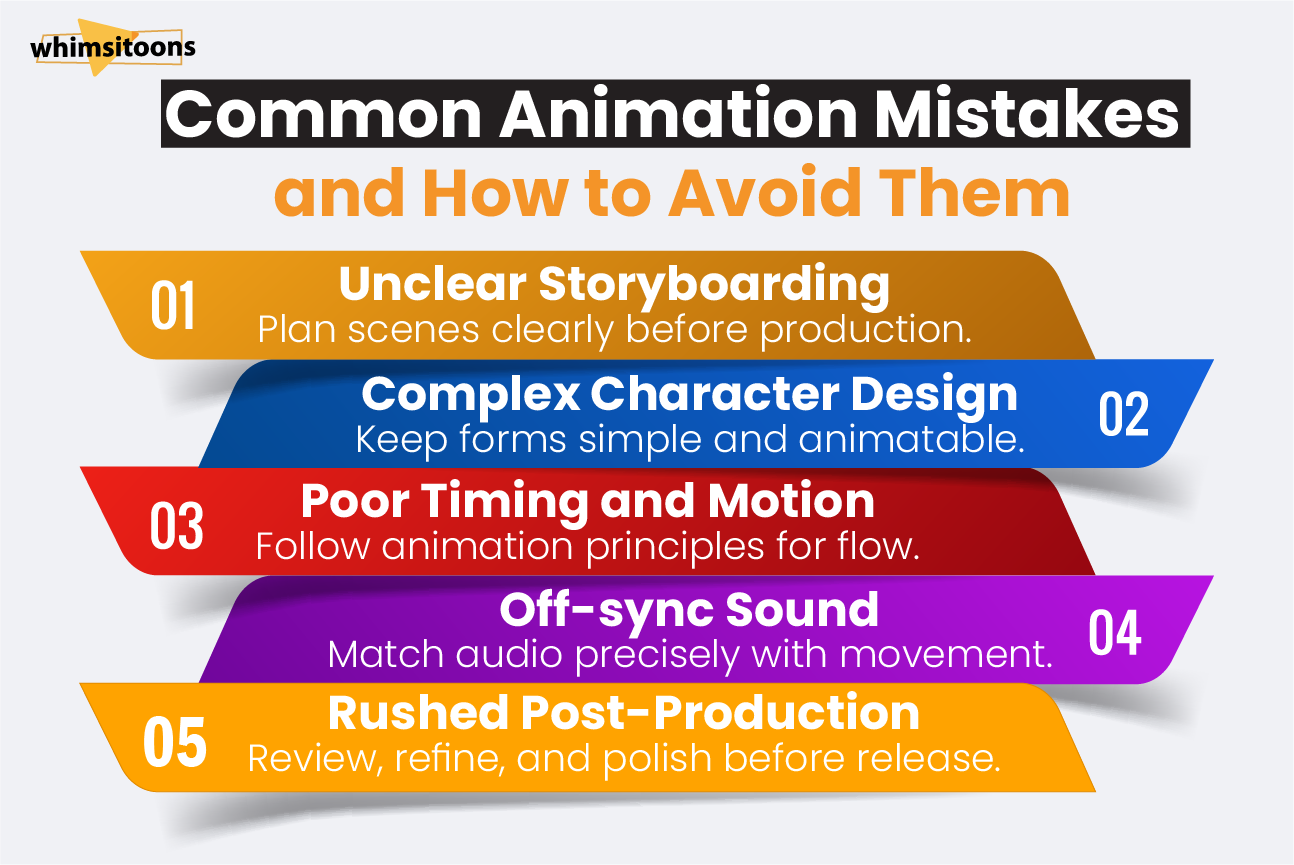
Quality control ensures the project meets the studio’s creative and technical benchmarks.
This includes testing rendering, lighting, visual effects (VFX), and synchronization between sound and animation.
Feedback from test screenings leads to revisions, often consuming 20–40% of the total animation production timeline.
Distribution and Release
Once the movie passes final testing, it’s prepared for distribution and release.
This includes marketing campaigns, press coordination, and scheduling around global cinema calendars.
Factors like production delays, rendering time, and distribution channel management can all influence the final release date.
Advanced Technology and Workflow Optimization
In modern animation production, technology defines efficiency and innovation.
Studios use advanced animation workflow management systems to coordinate teams across storyboarding, modeling, rigging, and post-production.
Real-World Case Study:
|
DreamWorks Animation architects built a disciplined digital infrastructure over decades to support high-volume CG feature production, demonstrating how robust pipeline planning and tech investment can streamline complex animation workflows. |
In the animation workflow in the USA, technologies such as motion-capture and automated rendering pipelines are standard. They minimize rendering time and streamline communication between departments.
This optimization helps maintain tighter animation production timelines and ensures consistency in visual quality.
Conclusion
To truly answer the question, “How long does it take to make an animated movie?”, we must consider pre-production, storyboarding, voice acting, animation workflow, rendering time, soundtrack composition, and distribution and release.
Ultimately, an efficient animation workflow determines how smoothly each stage connects.
In the animation workflow in the USA, studios emphasize collaboration, rendering efficiency, and innovation, balancing artistic expression with production discipline to deliver exceptional animated films.
FAQs
Q 1: What makes Whimsitoons different from other animation studios?
Whimsitoons focuses on combining storytelling and design precision, offering end-to-end animation services that streamline production without compromising creativity or quality.
Q 2: How does Whimsitoons ensure the timely delivery of animated projects?
With an optimized animation workflow and dedicated project management, Whimsitoons maintains clear timelines, ensuring each phase, from storyboarding to post-production, stays on schedule.
Q 3: How long does it take to make an animated movie in the USA?
A full-length animated movie in the USA typically takes 18 months to 5 years, depending on budget, complexity, and production scale.
Q 4: What is the typical production time for a 3D animated feature film?
A 3D animated feature film generally requires 3 to 5 years, given its detailed modeling, rendering, and visual effects work.
Q 5: How long does 2D and 3D feature animation take?
2D animation usually finishes within 1 to 2 years, while 3D animation can extend to 3 to 5 years, due to higher technical demands.
Q 6: What is the average timeline for producing an animated film in the US?
The average timeline for producing an animated film in the US ranges between 2 and 4 years, influenced by project size, animation style, and available resources.rn
Q 7: How long does it typically take to make a full-length animated movie?
On average, a feature-length animation takes between 18 months and 5 years, depending on the animation workflow and complexity.